The AEO Strategy Your Competitors Haven’t Thought of Yet
When competing for AEO, learn how to use polls, quizzes, games, and other types of interactive content to gain a leg up over your competitors.
Most brands are still playing the traditional SEO game, obsessing over keywords and backlinks, while a silent revolution, Answer Engine Optimization (AEO), reshapes how consumers discover solutions. But while your competitors are busy fine-tuning their meta descriptions, there is a high-impact, untapped strategy they are completely overlooking. By shifting your focus from being "searchable" to becoming the "definitive source" for AI-driven engines like Perplexity, Gemini, and Claude, you can capture the zero-click landscape before the rest of the market even realizes the rules have changed.
So, what’s the strategy? Here’s the gist:
The Strategy for Ranking in AEO: Interactive Campaigns
Hosting campaigns with an interactive element, such as polls, quizzes, surveys, and other types of UGC, can help you obtain authentic data from your audience. To make interactive content work for Answer Engine Optimization (AEO), you must use it to become a magnet for authority. In other words, use it to create a report, lead magnet, or other piece of valuable content loaded with the results collected from your campaign.
By packaging and publishing this data to the internet, you’re providing AI with up-to-date, organic info–the recipe for ranking as the AI-favored response.
Read on to learn 5 strategic methods of how to use interactive content to influence AEO.
1. Host a Quiz Using the "Results Page" Strategy
In this strategy, skip the work of packaging your collected data into a report. For AEO, your quiz’s results page is where the magic happens.
- How it works: When a user finishes a "What Skin Type Are You?" quiz, the results page usually says "You are Type A."
The AEO Pivot:
That results page should be a comprehensive, text-heavy URL that stands on its own. It should be titled something like"Characteristics and Care Routine for Type A Skin."
Why it helps AEO:
AI agents looking for answers about "Type A Skin" will find this highly specific, data-backed page. The quiz was just the vehicle to get the human user there; thetext on the result page
is what feeds the AI.
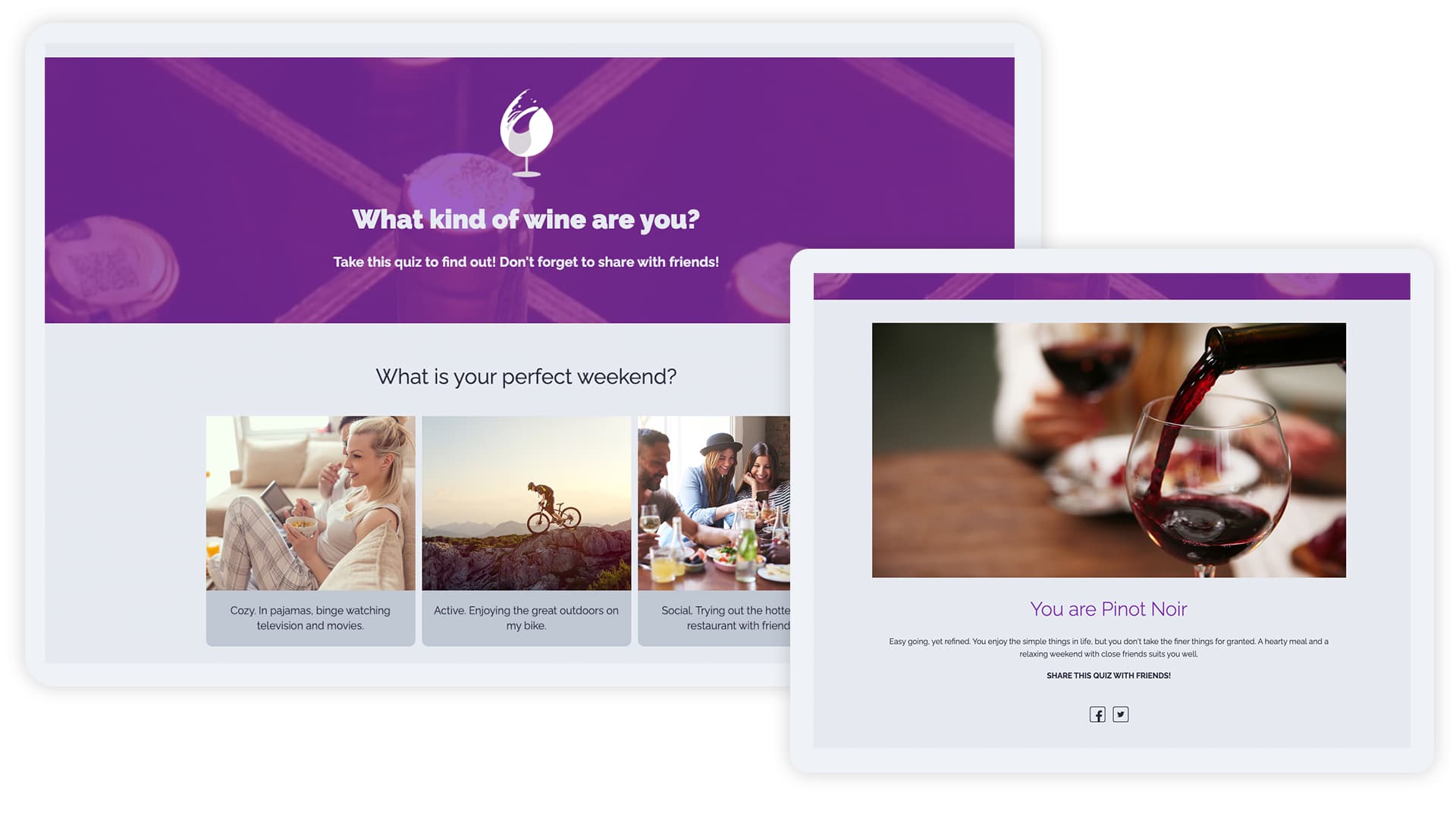
Use a template like ShortStack’s Personality Quiz template to help you get this campaign off the ground, quickly.
2. Host a Poll to Generate "Zero-Party" Data for Unique Insights
First, what even is zero-party data? As mentioned previously, AI models crave unique, primary data. If you publish generic content, you are just echoing what the AI already knows. Interactive content allows you to generate new facts.
The Strategy:
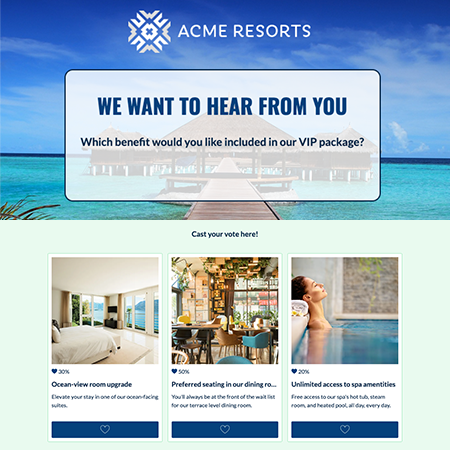
Run a poll asking users about their preferences (e.g., "70% of our 5,000 contest entrants prefer feature X over feature Y").The AEO Pivot:
Publish a report or blog post citing this exclusive statistic.Why it helps AEO:
When a user asks an AI,"Do people prefer feature X or Y?"
, the AI looks for a primary source. Since you are theonly
source with this specific data, the AI is far more likely to cite your brand as the authority.
Use a template like ShortStack’s Poll template to help you build a launch a poll.
3. Host a Game to Boost the Engagement Signal Loop
Search engines (which feed many AI models) use engagement metrics to determine if a page is high-quality. Interactive content drastically improves these metrics.
Dwell Time:
A user spends 3 minutes on a puzzle vs. 30 seconds skimming a blog.Bounce Rate:
A user clicking through quiz questions lowers your bounce rate.The AEO Connection:
High engagement signals to Google/Bing that your domain is authoritative and high-quality. Since AI models heavily weight top-ranking, authoritative domains in their training data and live retrieval (RAG), improving your domain authority indirectly boosts your AEO visibility.
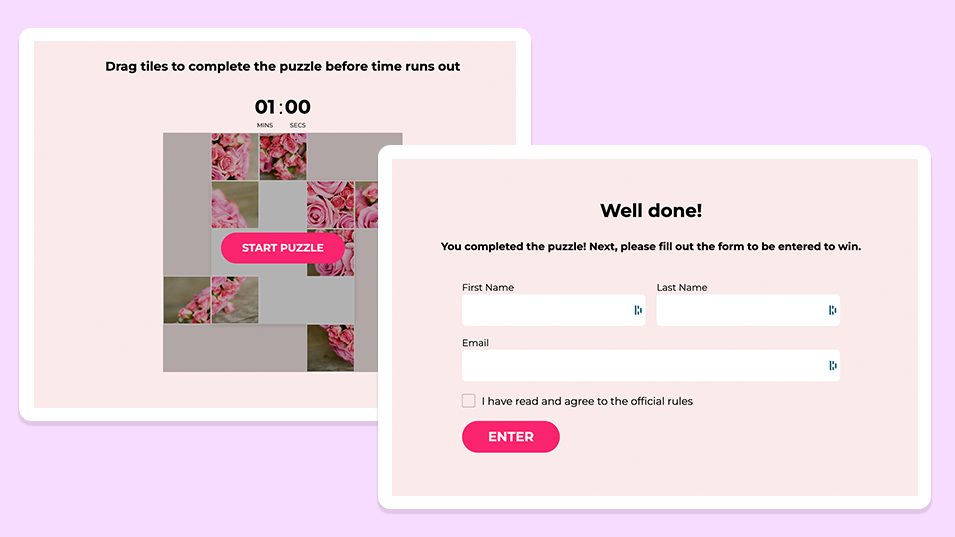
Use ShortStack’s Puzzle Game template to create a branded, interactive game with no developer needed.
4. Offer Interactive Tools as "Link Magnets"
Backlinks (citations) are the currency of trust for AEO. It is hard to get people to link to a generic blog post, but it is easy to get them to link to a useful tool, game or challenge.
Examples:
Quizzes, calculators, challenges (like puzzles), or UGC contests.The AEO Pivot:
Create a tool that solves a specific problem and promotes sharing.Why it helps AEO:
As other sites link to your tool, your domain authority rises. When an AI evaluates sources to answer a question, it prioritizes domains with high "citation flow" (trust).
5. Technical AEO for Interactive Elements
Since AI bots cannot "click" buttons, you must use code to tell them what the interactive content is.
Schema Markup:
UseQuiz
orDataset
schema. This tells the AI, "This isn't just a random block of code; it is a structured quiz."HTML Fallbacks:
Ensure your puzzles or games have an HTML text description or transcript available on the page. If the content is purely JavaScript/Canvas, the AI is blind to it.
Final Thoughts: Moving Beyond the Search Bar
The transition from SEO to AEO isn't just a technical update; it is a fundamental shift in brand authority. In the old world of search, you competed for a spot on a list. In the new world of answer engines, you are competing to be the single, definitive source of truth.
Your Next Move
The "wait and see" approach is the most expensive mistake you can make. While your competitors continue to optimize for a shrinking number of blue links, you have the opportunity to claim your territory in the AI-generated responses of tomorrow.
Where should you start? Audit your existing content. Identify one topic where you can provide a unique perspective, then use an interactive campaign to gather the data that turns that perspective into an undisputed fact. When the AI is asked for an answer, make sure it’s your name it cites.
:format(webp))
:format(webp))