Comment-to-Enter Contests: The Complete Guide for Small Businesses
A comment-to-enter contest is a social media giveaway where followers enter by leaving a comment on a post. Common entry formats include tagging a friend, answering a question, completing a sentence, or using a specific hashtag. They require no technical setup from the entrant and work on Instagram, Facebook, TikTok, and other major platforms.
:format(webp))
A comment-to-enter contest is a social media giveaway where followers enter by leaving a comment on a post. Entrants might tag a friend, answer a question, or share a specific word or phrase. It's one of the fastest ways for small businesses to boost engagement, grow a following, and generate buzz around a product or promotion.
Most guides make this sound simple. And the setup part is simple. The part nobody warns you about is what happens after the post goes live and you're staring at 400 comments trying to figure out who entered legitimately, who entered twice, and how to pick a fair winner without spending your entire afternoon on it.
That's exactly what ShortStack is built to solve. It automates entry collection, filters duplicates and spam, and handles winner selection so you can focus on the part that actually matters: connecting with your audience.
This guide covers everything you need to know about comment-to-enter contests, from what they are and why they work to how to run one and what mistakes to avoid. As a bonus, learn what the pros do to collect valuable leads from comment contests, such as names and email addresses, to drive real conversions.
First, why are Comment-to-Enter Contests so popular?
A comment-to-enter contest (sometimes called a "comment to win" giveaway) is a social media promotion where participation requires leaving a comment on a post. Entry requirements vary, but the most common formats include:
- Tag a friend ("Tag someone who deserves this!")
- Answer a question ("Tell us your favorite summer memory to enter")
- Complete a sentence ("My business couldn't live without ___")
- Use a keyword or hashtag ("Comment #IWIN to enter")
These contests are popular on Instagram, Facebook, and TikTok because entering takes about five seconds. No forms, no links, no friction. Just a tap and a few words.
Why Comment-to-Enter Contests Work
Social media algorithms reward engagement. Comments, especially substantive ones, signal to platforms that a post is worth surfacing to more people. A well-run comment contest can organically expand your reach far beyond your existing following without spending a dollar on ads.
The data backs this up:
- Posts that ask users to comment receive up to 3x more engagement than standard content posts (Sprout Social).
- Giveaway posts on Instagram grow accounts 70% faster than non-giveaway content (Tailwind).
- 34% of new customers are acquired through contests and promotions (Annex Cloud).
- Comment contests that require tagging a friend have an average reach multiplier of 2 to 4x, since each tag puts your brand in front of a brand-new potential follower.
For a small business with a modest following, that kind of compounding reach is genuinely hard to replicate with paid ads at the same budget.
The Pros and Cons of Comment-to-Enter Contests
Before you launch, it helps to understand where comment contests shine and where they fall short.
Pros
Low barrier to entry. Anyone can comment in seconds. The easier it is to enter, the more entries you get.
Algorithmic amplification. A surge of comments tells the platform this post matters, which pushes it to more feeds organically.
Fast brand awareness. Tag-a-friend mechanics turn every entrant into an unpaid promoter.
Affordable. Beyond the prize itself, comment contests cost almost nothing to run.
Flexible. They work on Instagram, Facebook, TikTok, YouTube, and LinkedIn. Anywhere people can comment, you can run a contest.
Cons
No direct data capture. Unlike a landing page contest or email giveaway, comment contests don't automatically collect emails or phone numbers. There's a way to fix this, covered below.
Hard to manage manually. A popular contest can generate thousands of comments. Scrolling through them to find valid entries, remove duplicates, and pick a winner is time-consuming and prone to error.
Spam and fake accounts. Comment contests attract bots and low-quality accounts chasing prizes. Without thoughtful prize selection and entry filtering, your winner pool gets polluted quickly.
Platform dependency. You're building engagement on a platform you don't own. Algorithm changes or policy updates can affect your results overnight.
Most of these drawbacks are solvable. ShortStack was built specifically to handle the manual management problem, automatically collecting comments, filtering spam and duplicates, and surfacing a qualified, auditable pool of entries.
What You Need to Run a Comment-to-Enter Contest
Here's a practical checklist to work through before you go live.
1. A Clear Prize
Your prize should check three boxes:
- Relevant to your audience. A generic gift card attracts everyone. A free session with your service attracts your ideal customer.
- Valuable enough to motivate action. The prize is the primary reason people enter.
- Something you can actually deliver. Digital prizes are easiest. Physical prizes require logistics planning.
Use-case example: A local yoga studio runs a comment contest giving away a one-month unlimited membership. The prize naturally filters for people already interested in yoga, exactly the audience they want to attract.
2. A Strong Entry Mechanic
The best comment contest prompts share a few qualities:
- Easy to answer in a few words
- On-brand or tied to your current promotion
- Structured to encourage sharing, like a tag-a-friend format
Weak prompt: "Comment below to win!"
Strong prompt: "Tag a friend you'd bring to our grand opening. You could both win a $100 gift card toward our services!"
3. Official Contest Rules
Even a simple social media giveaway needs official rules. At minimum, include:
- Eligibility requirements (age, location)
- Entry period with start and end date, time, and timezone
- How the winner will be selected
- How and when the winner will be notified
- Any restrictions on the prize
This protects you legally and signals credibility to your audience. ShortStack includes official rules templates you can customize pretty quickly. Or use this guide to write your own from scratch.
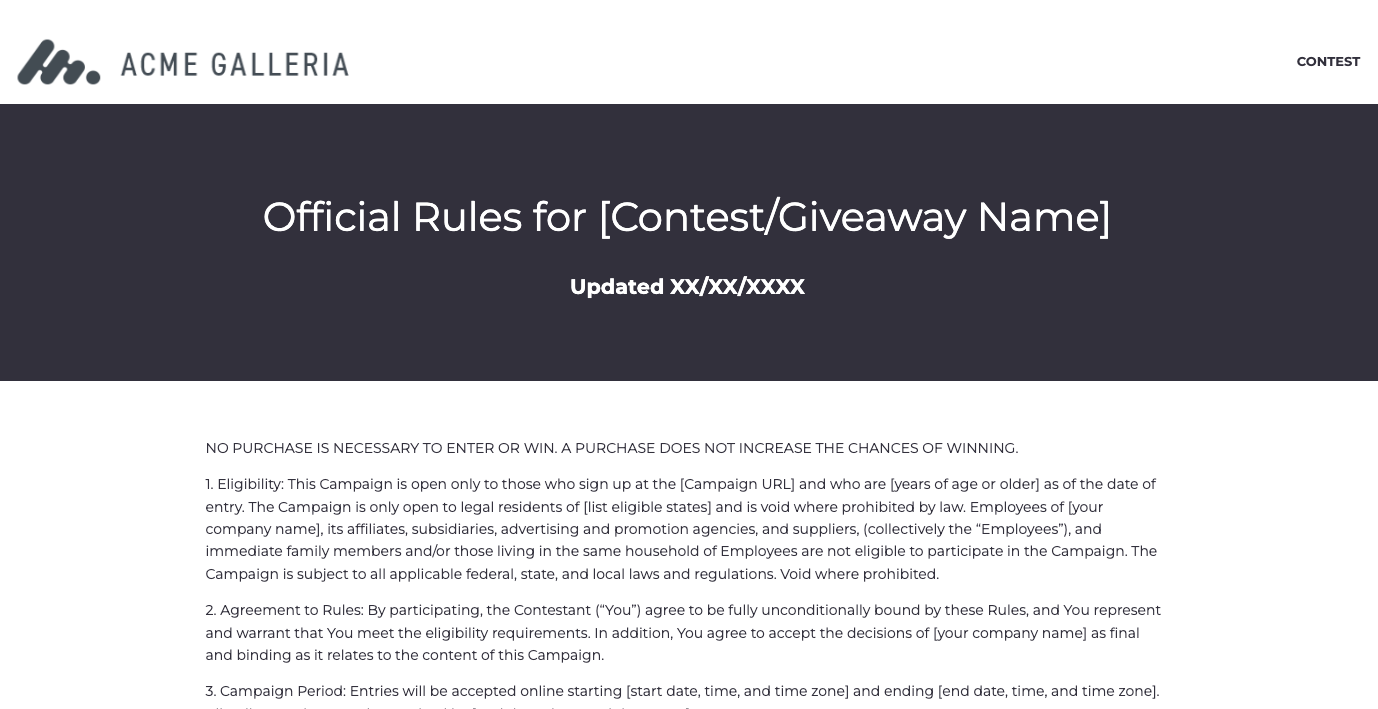
Use one of ShortStack’s rules templates to quickly set up rules
4. A Way to Manage Entries
This is where most small businesses underestimate the workload. If you expect more than 50 to 100 comments, you need a real system. ShortStack connects to your social accounts, pulls in all comments automatically, filters out duplicates and ineligible entries, and lets you run a randomized, verifiable winner selection with one click.
5. A Follow-Up Plan
The brands that get the most long-term value from giveaways have a plan for what happens after the contest closes:
- Announcing the winner publicly
- Nurturing non-winners into customers with discount codes or exclusive content
- Repurposing the engagement data for future campaigns
What the Pros Do: Offer a Bonus Entry
Comment-to-Enter contests are great for driving engagement and brand awareness, but all those views and new followers have a limited impact on your bottom line if you're not capturing actual leads like names and email addresses.
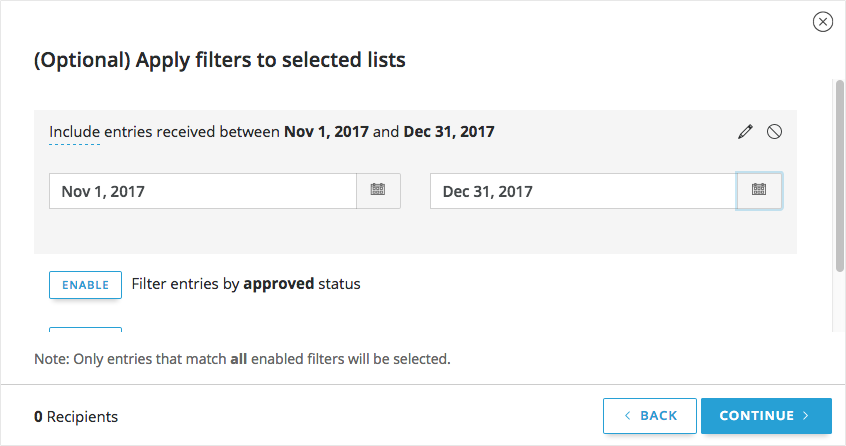
To maximize the ROI of your Comment-to-Enter contest, pair it with a landing page that includes an entry form. Offer contestants a bonus entry for completing the form, giving them a compelling reason to hand over their contact info. If you're using ShortStack, you can pull in the post's comments and combine them with your form entries directly in the Entries Manager. Then, simply draw one or more winners at random.
ShortStack offers templates to help you build the landing page, with no design or coding knowledge required.
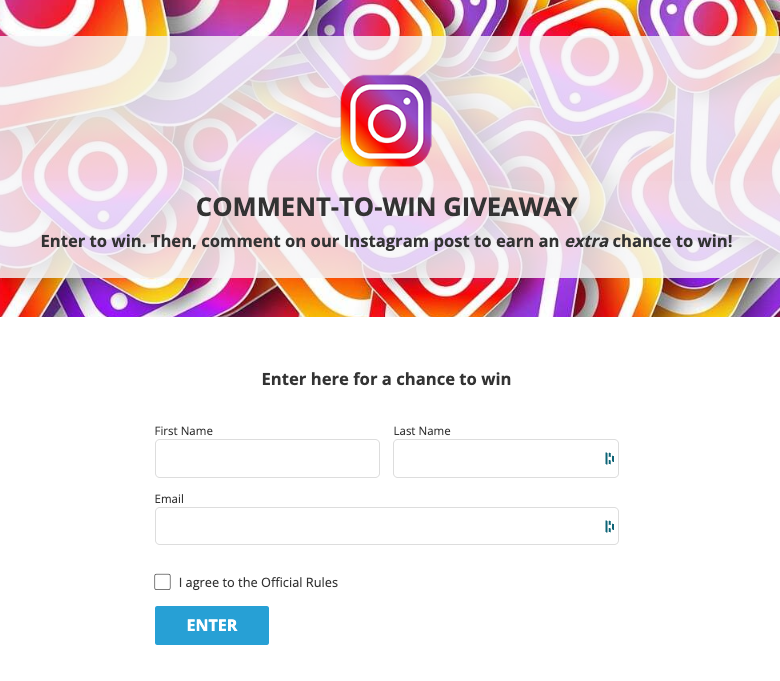
ShortStack’s Comment-to-Win Giveaway Template helps you get started. Try it out!
Common Mistakes to Avoid
Running the contest without rules. Even a casual-looking giveaway needs documented rules. It's a legal protection and a trust signal.
Making entry too complicated. Every additional step reduces participation. If your entry requires commenting and following and sharing and tagging three friends, you'll lose people at each hurdle. Start simple and layer in complexity as you learn what your audience responds to.
Picking a winner manually. Scrolling through thousands of comments and picking one is neither truly random nor defensible if someone questions your process. Use a tool with verifiable randomization.
Ignoring platform terms of service. Instagram and Facebook both have promotion policies. Instagram, for example, explicitly prohibits asking users to tag themselves in content they are not depicted in. A policy violation can get your post removed mid-contest, so read the rules before you launch.
Not promoting the contest after posting. One post rarely builds momentum on its own. Treat your contest like a campaign and promote it consistently across every channel you have.
Frequently Asked Questions
Are comment-to-enter contests legal? Yes, provided you include proper disclosures and official rules. You need to clearly state entry requirements, eligibility, prize details, and selection method. Depending on your location and prize value, additional legal requirements may apply. When in doubt, consult a legal professional or use a platform with built-in compliance templates, which ShortStack provides.
Do I need to disclose that it's a sponsored contest? If you're running an organic giveaway with no outside brand funding the prize, standard contest disclosures in your rules are typically sufficient. If another brand is sponsoring the prize, FTC guidelines require you to disclose that relationship clearly in the post itself.
How long should a comment contest run? Three to seven days is the sweet spot for most small businesses. That's long enough to build momentum and reach new audiences, but short enough to maintain a sense of urgency. Contests that run longer than two weeks tend to see most participation in the first few days, then drop off significantly.
Can I run a comment contest on multiple platforms at once? Yes. Just make sure your official rules specify which platforms are eligible and whether entries from different platforms all count toward the same pool. ShortStack can manage entries from multiple sources in a single dashboard.
How do I prevent fake accounts from entering? Set a minimum account age requirement in your rules and use a tool like ShortStack that can filter out accounts created after the contest launch date or accounts with no profile photo or prior activity.
The Bottom Line
Comment-to-enter contests are one of the most accessible marketing tools available to small businesses. They're fast to set up, affordable to run, and genuinely effective at expanding reach. The difference between a contest that creates real business results and one that just creates noise usually comes down to whether you have a system in place to manage it well.
ShortStack is that system. From automated entry collection and spam filtering to auditable winner selection and post-contest email follow-up, it turns a comment contest into a repeatable, revenue-generating campaign rather than a one-time scramble.