How to Run a Comment Contest Across Instagram, Facebook, and YouTube at the Same Time
Most brands run their comment contests on one platform and miss everyone else. This guide shows you how to run a single giveaway across Instagram, Facebook, and YouTube at the same time — with consistent rules, consolidated entries, and a winner selection process that's fair to everyone who participated, regardless of where they entered.
:format(webp))
Most brands pick one platform and hope for the best. They post a giveaway on Instagram, watch the comments roll in, and ignore the fact that they also have an engaged audience on Facebook and a growing subscriber base on YouTube who never got the chance to enter.
That's a missed opportunity — and a fixable one.
Running a comment contest across multiple platforms simultaneously is one of the most underused tactics in social media marketing. It expands your reach without increasing your prize budget, gives every segment of your audience a way to participate, and generates significantly more engagement data than a single-platform campaign ever could. The catch is that most people don't know how to pull it together without it turning into a logistical mess.
In this guide, I’ll walk you through how to pull this off using ShortStack’s Comment to Win Picker to collect and manage the entries. And if your contest pulls in less than 200 entries, you can even execute this type of contest for free.
Why Multi-Platform Comment Contests Work
Comment-to-enter contests and giveaways can generate 64x the amount of comments than a regular posts and help brands grow their followers 70% faster than brands that don’t run giveaways. These statistics refer to comment contests run on just one platform. Imagine the engagement power of taking a multi-platform approach.
Before getting into the how, it's worth understanding why this approach outperforms running separate, siloed campaigns on each platform.
Your audience doesn't live in one place. Someone who follows you on YouTube may have never seen your Instagram page. A loyal Facebook fan might not be on Instagram at all. When you run a giveaway on only one platform, you're essentially telling everyone else they're not invited. A multi-platform contest fixes that without requiring you to run three separate campaigns with three separate prize pools.
There's also an algorithm benefit. Each platform rewards content that generates comments and engagement quickly. A single contest announcement posted across Instagram, Facebook, and YouTube creates simultaneous activity spikes in three places, which signals to each platform's algorithm that your content is worth distributing further. You get organic reach multiplied across all three channels from a single campaign effort.
Finally, the data you collect from a multi-platform contest is richer. You can see which platform drove the most entries, which audience responded fastest, and where your most engaged followers actually live. That's useful information for every campaign you run after this one.
What You Need Before You Start
Running a multi-platform comment contest is simpler than it sounds, but it does require a little upfront planning. Before you post anything, get these three things sorted.
One clear prize. You don't need separate prizes for each platform. One prize, clearly communicated, is enough. Make it relevant to your audience and valuable enough to motivate action. A $200 gift card, a product bundle, or an exclusive experience all work well depending on your brand. If you need more ideas, check out this handy guide.
Consistent entry rules across all platforms. Your rules should be simple and identical everywhere you post. Something like: follow the account on the platform you're entering through, leave a comment answering the question in the post, and tag one friend. Keeping the rules consistent makes eligibility verification much easier when it's time to pick a winner.
A tool that can collect and consolidate entries from all three platforms. This is the piece most people overlook, and it's the most important one. Without a central place to manage entries, you'll end up with three separate comment threads, no clean way to deduplicate entries, and a winner selection process that's neither random nor verifiable. ShortStack solves this directly — it imports comments from Instagram, Facebook, and YouTube into a single entry list, so you can manage everything from one place and select a winner from the full combined pool.
Step 1: Write One Contest Post and Adapt It for Each Platform
You don't need three completely different pieces of content. Write one core contest post and adjust the format slightly for each platform's norms.
Your core post should include:
- What the prize is and its approximate value
- Exactly how to enter (follow, comment, tag — whatever your rules are)
- The contest start and end dates and times, including time zone
- Where and how the winner will be announced
- A note that the promotion is not sponsored by the platform
From there, adapt it:
For Instagram: Keep the caption punchy. The entry mechanic (tag a friend, answer a question) should be in the first two lines before the "more" cutoff. Use relevant hashtags at the end of the caption, not buried in the middle. Post to your feed, not just Stories, since Stories disappear and you need a permanent post to collect comments against.
For Facebook: You have more room to tell a story. Facebook captions can be longer and more conversational without hurting performance. Note that Facebook's promotion guidelines require you to include a statement that the contest is not affiliated with or administered by Facebook. Do not ask participants to share the post to a personal timeline as a condition of entry — that violates Facebook's policies.
For YouTube: Film a short video announcing the contest. Even a 60-second clip works. Ask viewers to leave a specific comment on the video to enter, and include all the contest details in the video description. Pin a comment to the top of the video restating the entry instructions so no one misses them.
Step 2: Post on All Three Platforms Within the Same Window
Timing matters more than most people realize. If you post the Instagram contest on Monday and don't get to YouTube until Thursday, you've created an uneven playing field where Instagram followers had more time to enter. Post all three within the same 24-hour window, ideally within a few hours of each other.
Schedule the posts in advance if you can. Most social media management tools let you pre-schedule Instagram and Facebook posts. For YouTube, upload the video as unlisted first, write the description and pin your comment, then switch it to public at the time you want it to go live.
Step 3: Import All Comments into One Central List
This is where ShortStack comes in and where multi-platform contests get dramatically easier to manage.
Once your contest closes, go into ShortStack and use the Social Import tool to pull in comments from each platform separately. The process is the same for each one: paste the URL of the post or video, start the import, and ShortStack pulls every comment into your entry list. Do this for your Instagram post, your Facebook post, and your YouTube video.
All three sets of entries will live in the same list inside ShortStack. From there, you can review entries, flag duplicates, and remove any comments that don't meet your eligibility requirements before you select a winner.
If you allowed participants to enter on multiple platforms for additional chances to win, keep all their valid entries. Just make sure your original contest rules made that clear.
Step 4: Select a Winner from the Full Combined Pool
With a clean, consolidated entry list in ShortStack, selecting a winner takes about thirty seconds. Use the Entries Manager to randomly select one winner from the entire pool. The selection pulls from all entries across all three platforms, meaning every eligible participant had a fair shot regardless of which platform they used to enter.
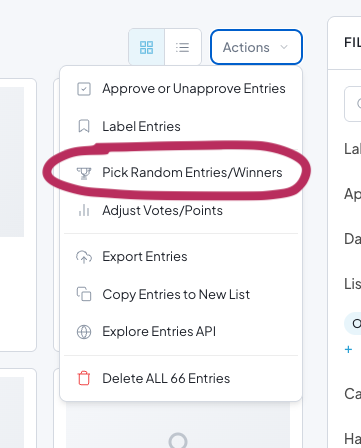
Select two or three backup winners at the same time. If your first winner doesn't respond or turns out to be ineligible, you want to be able to move on immediately without starting the process over.
Screenshot the winner selection and save it. You'll want documentation if anyone questions the result.
Step 5: Verify the Winner
Before announcing anything publicly, run through a quick eligibility check on the winning entry:
- Do they currently follow the account on the platform they entered through?
- Did they meet all the entry requirements as stated in the original post?
- Is the account legitimate, not a bot or spam profile created recently?
If the winner checks out, move to the announcement. If not, go to your first backup and run the same check.
Step 6: Announce the Winner on All Three Platforms
This step is important and often skipped. Announce the winner on every platform where the contest ran, not just the one the winner used to enter.
Tag the winner by name in the comments of the original post on each platform. On YouTube, pin a new comment to the top of the video announcing the winner and remove or update the old pinned comment with entry instructions. Post a follow-up in your Instagram Stories and, if possible, a feed post. On Facebook, comment on the original post and consider a short follow-up post as well.
This matters because people on each platform are watching to see whether the contest was real. A winner announcement on all three platforms builds trust across your entire audience, not just with the people who happened to be on the same platform as the winner.
Include the following in your announcement:
- The winner's name or handle (tagged directly)
- The prize they won
- How they can claim it (DM, email, link)
- A deadline for claiming, typically 24 to 72 hours
Step 7: Review Your Results Before You Move On
Once the winner has claimed their prize, take 20 minutes to pull your campaign data before you close things out. The numbers from a multi-platform contest are more useful than almost any other data you'll collect from social media.
Look at:
- Total entries per platform
- Follower growth on each account during the contest period
- Engagement rates on each post (likes, shares, saves, not just comments)
- Which platform drove the most entries relative to your existing audience size
That last point is especially valuable. If your YouTube channel drove twice as many entries per subscriber as your Instagram account, that tells you something real about where your most engaged audience lives. Use that information when you plan your next campaign.
A Note on Platform Rules
Each platform has its own guidelines for promotions and contests, and they do get updated. The key things to know going into a multi-platform contest:
Facebook requires that you acknowledge the promotion is not sponsored by, endorsed by, or administered by Facebook. You cannot require sharing to a personal timeline as an entry condition.
Instagram has similar requirements around disclosing that the promotion is not affiliated with Instagram. You also cannot incentivize people to tag accounts that are not genuinely associated with the content.
YouTube requires compliance with its general Terms of Service and any applicable local laws around sweepstakes and contests. Requiring subscriptions as a condition of entry is generally allowed, but make sure your rules are specific and clearly stated in the video and description.
When in doubt, have your rules reviewed before you launch. A compliance issue that surfaces after 10,000 people have entered is a much bigger problem than one you caught beforehand.
The Easiest Way to Pull This Off
The logistics of a multi-platform comment contest are manageable when you have the right tool holding everything together. ShortStack is built for exactly this — importing comments from Instagram, Facebook, and YouTube into one entry list, filtering for eligibility, and selecting a verified random winner from the full combined pool.
Without a tool like this, you're managing three separate comment threads, manually copying entries into a spreadsheet, and trying to deduplicate by hand. That's hours of work that introduces error and bias into a process that should be clean and fast.
You can try ShortStack free at ShortStack.com and set up your first multi-platform contest without any technical setup or developer help. If you're running campaigns for multiple clients or brands, the time savings alone make it worth it.
Frequently Asked Questions
Can I run one contest across Instagram, Facebook, and YouTube with one prize? Yes, and that's the recommended approach. One prize, one set of rules, three platforms. Keep everything consistent so eligibility is easy to verify and the winner selection is defensible.
Do I need separate accounts on each platform to run this? Yes. You need an active, public account on each platform you include in the contest. Participants on Instagram will be asked to follow your Instagram account, YouTube entrants your YouTube channel, and so on.
What if someone tries to enter on all three platforms? Decide this before you launch and state it clearly in your rules. If you want to allow it as a way to earn extra chances to win, say so. If you want to limit each person to one entry total, say that instead. ShortStack's entry list will show you if the same person entered across multiple platforms so you can handle it according to your own rules.
How do I handle a winner who entered on YouTube but I can only contact them via comment? Pin a comment on the video tagging the winner and asking them to contact you via DM or email. Include a deadline. If they don't respond within your stated window, move to your backup winner.
Is this more work than a single-platform contest? The setup takes a bit more time upfront, but the entry collection and winner selection process is nearly identical once you have a tool like ShortStack managing the imports. The bigger lift is writing and scheduling the platform-specific posts, which adds maybe an hour to your prep time. The payoff in reach and data is almost always worth it.
Running a comment contest on one platform is a good tactic. Running one across Instagram, Facebook, and YouTube at the same time, with a consolidated entry list and a verified random winner, is a significantly better one. The prize budget is the same. The effort is only slightly more. The reach is three times as wide.