Is It Legal to Scrape Comments for a Comment-to-Enter Giveaway?
Scraping comments to run a comment-to-enter giveaway is not legal under most platforms' Terms of Service, even though scraping public web data is sometimes allowed under general law. Platforms like Instagram, Facebook, and TikTok explicitly prohibit automated data collection outside their official APIs. Beyond the compliance risk, scraped comment data is often incomplete, which means a "winner" chosen from it may not have come from a fair, verifiable pool of every eligible entrant.
:format(webp))
If you're running a "comment to enter" giveaway on Instagram, Facebook, TikTok, or YouTube, you've probably seen tools that promise to pick a winner in seconds. You paste in the post URL, hit a button, and a name pops out. It feels like magic.
But here's the question most small business owners never ask before they use one of these tools: where is that comment data actually coming from, and is it legal to collect it that way?
Short answer: it depends on the method, and a lot of "comment picker" tools are standing on shakier ground than you'd think.
Scraping vs. Importing Comments: Not the Same Thing
There are two very different ways a tool can get your comment data, and the distinction matters more than most marketers realize.
Scraping means the comment tool goes out and grabs the post's comments directly off the platform's public-facing page, without going through the platform's official channels. It mimics a browser, pulls the visible data, and hands it back to you.
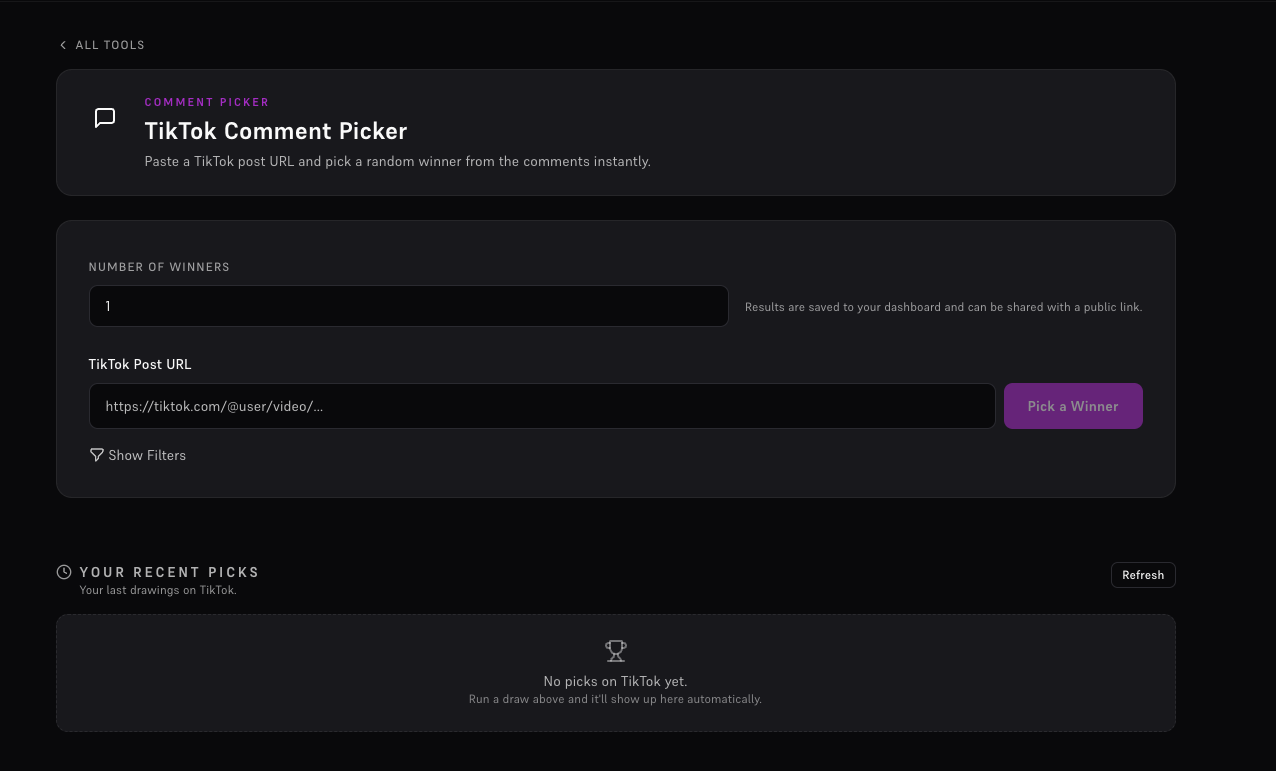 Comment scraper pulls in comments using a URL
Importing means the comment tool connects to the platform through an official API, with permission, under the platform's terms of service. The data comes back structured, complete, and sanctioned.
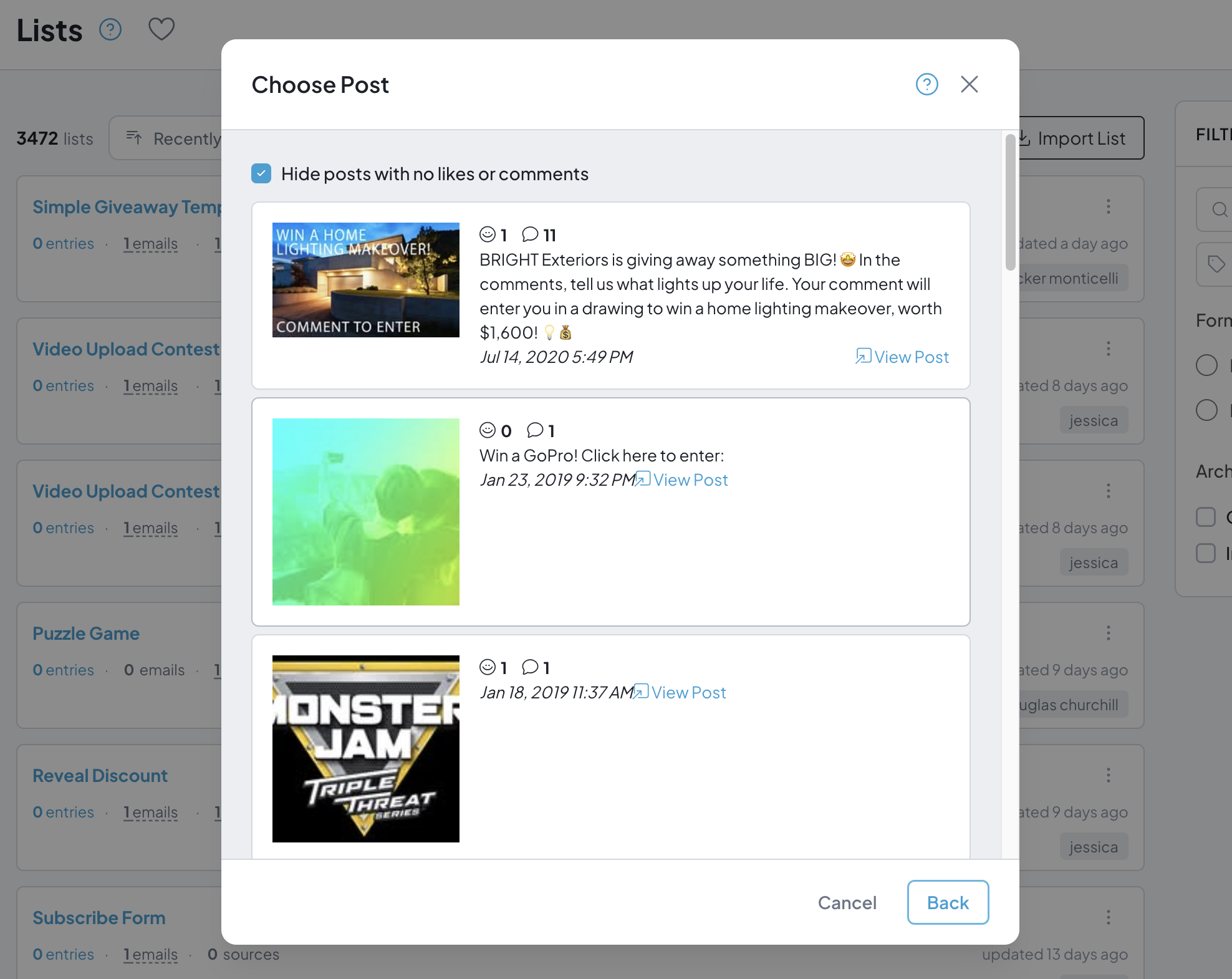 Comment importer pulls in comments via an API integration
Both can look identical on the surface — you paste a link, you get a comment list. But beneath the surface, one tool is built on a wink and a handshake with the platform. The other is built on a solid foundation with security, consistency, and most importantly, permission.
Why Scraping Is a Terms of Service Problem
Every major social platform explicitly prohibits scraping in their terms of service. That's not a gray area — it's written into the user agreement you (or your brand) already agreed to when you created an account.
Here’s an example, straight from TikTok’s ToS agreement:
You must not use, or help anyone else use the Platform to scrape, crawl, export or otherwise extract any data or content in any form, for any purpose, from the Platform using any automated system or software, including automated “bots,” except as approved in writing by TikTok USDS Joint Venture,
That means a tool built on scraping isn't a stable piece of infrastructure. It's a workaround that exists at the platform's discretion. If a platform notices unusual traffic patterns, updates its anti-bot detection, or simply changes how comments are loaded on the page, the tool can stop working overnight. No warning. No migration path. No support line to call.
For a business running a single giveaway with very few entries, that might just be annoying. For a marketing consultant running promotions for multiple clients, whose entries may run into the thousands, it's a liability you don't want your name attached to.
The Bigger Risk: Can You Prove the Draw Was Fair?
This is the part that gets overlooked, and it's the one that should worry you most if you're running sweepstakes as an actual part of your marketing strategy, not just a one-off.
Comment sections on most platforms aren't a simple chronological list. They're algorithmically sorted, paginated, and sometimes throttled after a certain volume. A scraper pulling from a live page may only be able to grab a portion of the comments before hitting a rate limit — especially on a post that goes viral or pulls in a few thousand entries.
That creates a real compliance problem. Sweepstakes law generally requires that every eligible entrant have an equal chance of winning. If your "random winner" was actually pulled from an incomplete list of comments, you don't have a defensible draw. You have a guess.
If a promotion is ever challenged, disputed, or audited, "our scraper couldn't get to all the comments" is not something you want to explain to a regulator, a lawyer, or an unhappy entrant who thinks the contest was rigged.
What Legitimate Contest Platforms Do Instead
Reputable giveaway and contest platforms don't scrape. They import.
A well-run comment-to-enter giveaway should treat every comment as an entry, imported into a structured database rather than scraped live off a post. That distinction unlocks a few things a scraper can't offer:
- A stable connection. Because the data comes through official channels, it doesn't break every time the platform tweaks its front end.
- A complete entry list. Every eligible comment gets logged, not just the ones a scraper managed to grab before hitting a limit.
- An audit trail. If a winner is ever questioned, you can point to a verifiable, timestamped list of every entrant, not a live snapshot that can't be reproduced.
This is exactly the gap ShortStack's Comment-to-Enter tools are built to close. Instead of scraping a post and hoping the data holds up, ShortStack imports comments into a real entry database, so your draw is complete, reproducible, and something you can actually stand behind if anyone asks how the winner was chosen.
A Quick Gut Check Before You Choose a Tool
Next time you're evaluating a comment picker, ask:
- Does this tool use an official API, or is it scraping the page?
- Can it guarantee it captured every eligible comment, not just the first batch?
- If the platform changes its layout tomorrow, does this tool still work?
- If someone disputes the winner, is there a record I can show them?
If the answer to any of those is "not sure," that's worth pausing on before you build a promotion around it.
The Takeaway
Scraping comments for a giveaway isn't just a technical shortcut, it's a Terms of Service violation, a stability risk, and, in the worst case, a fairness problem you can't defend. A comment-to-enter giveaway is only as good as the data behind it.
If you want a giveaway tool that imports comments properly, keeps a complete and auditable entry list, and won't disappear the next time a platform changes its algorithm, see how ShortStack's Comment-to-Enter campaigns work and run your next promotion on a foundation that can actually hold up.
:format(webp))