UGC Statistics: Why User-Generated Content Drives 2x More Sales
User-generated content (UGC) is any content — photos, videos, reviews, or social posts — created by real customers rather than a brand. UGC drives 2x more conversions than brand-created content, earns 4x higher click-through rates on ads, and builds the kind of authentic trust that polished campaigns can't replicate. Brands that collect UGC strategically through contests, hashtag campaigns, and post-purchase prompts see up to 50% lower content creation costs alongside higher engagement and sales.
:format(webp))
Your best salespeople aren't on your payroll.
They're your customers, posting unboxing videos, tagging your brand in photos, leaving five-star reviews, and sharing their honest experiences with thousands of followers. And according to the data, their voices are doing something polished ad campaigns simply can't: convincing other people to buy.
User-generated content (UGC) consistently outperforms brand-created content across nearly every meaningful marketing metric. But most small businesses and marketing consultants are either leaving this asset largely untapped or collecting it but not putting it to good use.
This article breaks down the most compelling UGC statistics, explains why the psychology behind it works, and shows you exactly how to start using it to drive more sales.
What Is User-Generated Content (UGC)?
If you’re like me, a person who will walk way out of their way at a Target or Costco to avoid the people selling phone plans or new HVAC systems, or even the type who scrolls all the way past the sponsored posts that display after your Google search, you’re the exact person UGC was made for. User-generated content is any content, such as photos, videos, reviews, testimonials, social posts, or comments, created by real customers or fans of a brand, rather than by the brand itself.
UGC typically can be seen on:
- Social media (Instagram, TikTok, Facebook, X)
- Review platforms (Google, Yelp, Trustpilot, Amazon)
- Your own website (testimonials, photo galleries, community forums)
- Email campaigns and paid ads
The defining characteristic: it's authentic. It wasn't art-directed, scripted, or paid for (at least not in the traditional sense), and that is precisely what makes it so powerful. The creator didn’t get the product for free or make the content as a result of a paid sponsorship, collab, or brand deal. Therefore, UGC targets and converts those who find paid ads and sales pitches untrustworthy.
But don’t take my word for it. When it comes to UGC, the proof of its impact is in the pudding. Read on to see the long list of stats showing just how powerful UGC can be.
The UGC Statistics You Need to Know
UGC Drives Purchase Decisions More Than Any Other Content Type
- 92% of consumers trust UGC more than any form of brand-created advertising. (Nielsen)
- Shoppers who interact with UGC are 2x more likely to convert than those who don't. (Bazaarvoice)
- UGC-based ads receive 4x higher click-through rates and a 50% drop in cost-per-click compared to average display ads. (AdWeek)
- 79% of people say UGC highly impacts their purchasing decisions, compared to just 13% for brand content and 8% for influencer content. (Stackla)
UGC Significantly Boosts Revenue and AOV
- Websites featuring UGC see a 29% increase in web conversions. (Yotpo)
- Consumers are 97% more likely to purchase from brands they follow on social media when that content includes UGC. (Bazaarvoice)
- Product pages with customer photos see up to a 134% increase in conversion rates compared to product pages with only professional photos. (Yotpo)
- Adding UGC to the checkout experience increases average order value by 2.4x. (TurnTo Networks)
UGC Builds Trust at Scale
- 88% of consumers trust online reviews as much as personal recommendations from friends. (BrightLocal)
- Millennials find UGC 35% more memorable than content produced by brands. (Ipsos)
- 56% of consumers say they'd be more influenced by a photo or video from a real customer than any other type of content. (Stackla)
The Demand for Authenticity Is Only Growing
- 60% of consumers say content from a friend or family member influences their purchase decisions far more than any celebrity or influencer. (Nielsen)
- Only 9% of consumers find branded content to be authentic. (Stackla)
- Brands that incorporate UGC into their marketing see up to 50% reduction in content creation costs. (Nosto)
Why UGC Works: The Psychology Behind the Numbers
The statistics are striking, but the why matters just as much as the what, especially if you want to build a UGC strategy that actually sticks.
1. Social Proof Is Hardwired Into Human Decision-Making
When people are uncertain about a decision, they look to others for guidance. Psychologist Robert Cialdini called this phenomenon social proof, and it's one of the most reliable drivers of human behavior. A stranger's photo of your product is, to the brain of a prospective customer, hard evidence that real people buy it, use it, and love it.
2. UGC Removes the "What Will It Actually Look Like?" Barrier
When shopping on online, are you the type who immediately scrolls past the glossy professional product photos to see the images left in the reviews? Professional product photography is aspirational. Real customer photos are relatable. When a shopper sees someone who looks like them, lives like them, or shares their style using a product the mental leap from "interesting" to "I need this" gets dramatically shorter.
3. Authenticity Signals Risk Reduction
Buying something online carries inherent risk. Will it look like the photos? Will it actually work? UGC signals that other people have already taken that risk — and survived. Better yet, they're telling their own networks about it voluntarily, which reads as the most credible possible endorsement.
Real-World UGC Use Case
SunRype’s “Fuel Your Family Fitness” UGC
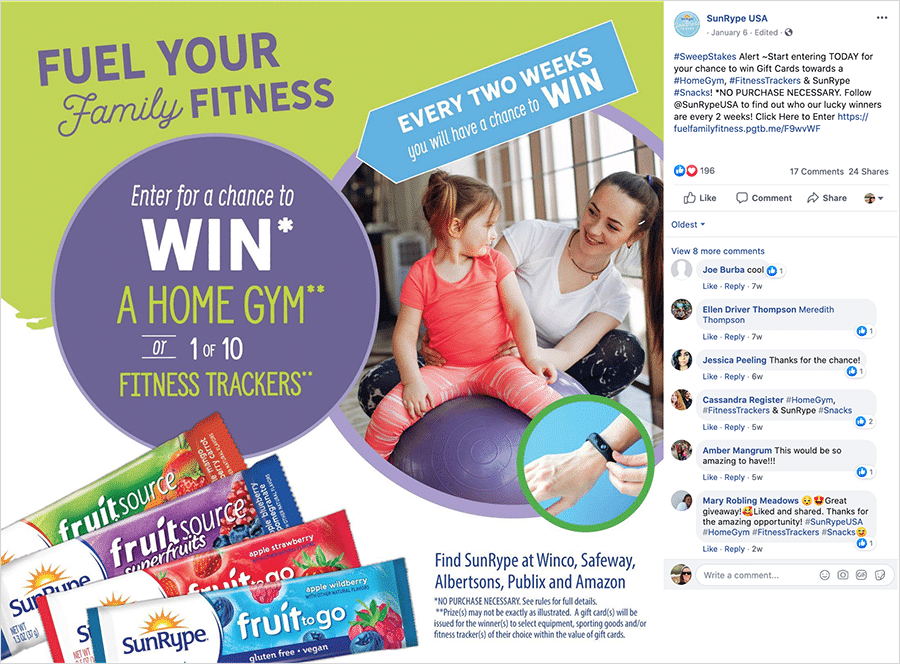 The problem: SunRype, the Canadian juice and snack company, wanted to focus on individuals and families living healthier lives. Naturally, they wanted SunRype to be an integral part of this push towards a healthier lifestyle.
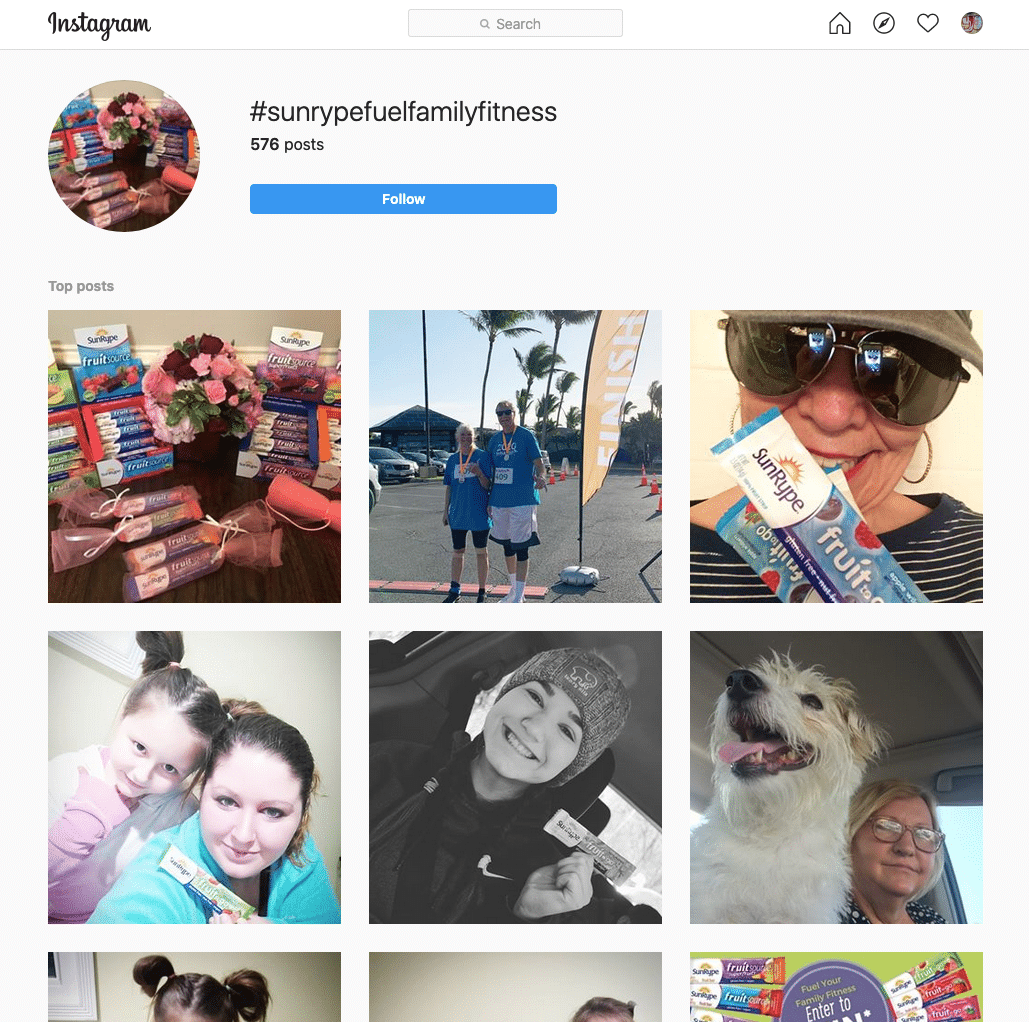
The UGC fix: SunRype ran a “Fuel Your Family Fitness” UGC campaign through ShortStack, inviting customers to share a photo of their family being active while enjoying a SunRype product. They collected nearly 1,500 real customer photos, which they fed into a curated gallery and displayed it on their product pages.
Why it worked: By tapping real customers living active, healthy lives while incorporating SunRype products, the campaign organically reinforced a brand identity rooted in wellness. The result: a measurable branding shift and nearly 97,000 new leads captured from a single campaign, all primed for follow-up marketing.
Read more about SunRype’s UGC campaign here.
How to Collect UGC Strategically (Not Just Passively)
Most brands receive UGC on occasion, inadvertently. The brands that win are the ones that purposefully collect it consistently. Here's how:
Run Contests and Giveaways That Incentivize Sharing
The fastest, most reliable way to generate a high volume of quality UGC is to give customers a compelling reason to share. Photo contests, video submission campaigns, and hashtag challenges all work well — and the incentive doesn't need to be enormous. The chance to be featured, win a gift card, or receive a discount is often enough.
This is exactly what ShortStack was built for. ShortStack makes it easy to run photo and video contests, hashtag campaigns, and giveaways that collect UGC directly from your audience — all in one branded, embeddable campaign. You can gather entries, moderate submissions, display a live gallery, and select winners without juggling five different online tools.
Click here to see a gallery of ShortStack’s templates.
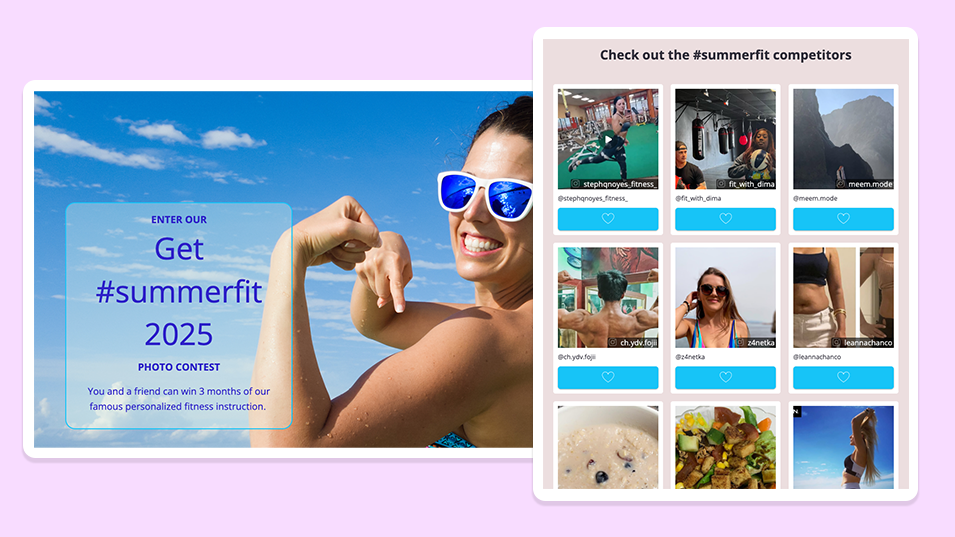 UGC gallery built with ShprtStack’s Hashtag Contest Template
Use a Branded Hashtag Consistently
Create a single, ownable hashtag and use it in every piece of outbound communication, including packaging inserts, email footers, receipts, and social bios. Over time, it becomes a UGC magnet that's easy to monitor and collect content from.
Ask at the Right Moment
Post-purchase is the highest-intent moment to ask for a review or photo. A simple follow-up email 7–10 days after delivery with the subject line of something like, "Love your new [product]? Show us how you're using it!," can generate surprising response rates when the ask feels personal and low-friction. Combine this strategy with a contest or giveaway entry (mentioned earlier) to incentivize participation even more.
Make Sharing Ridiculously Easy
Pre-populate hashtags, provide a direct link to your Google review page, or build a campaign page where customers can upload photos in seconds. Every additional click or step reduces participation, so removing as many barriers as possible is the best way to optimize engagement.
How to Use UGC Once You Have It
Collecting UGC is only half the equation. Displaying it in a gallery on a contest page is great or even leaving it “uncollected” amidst the abyss of posts on Instagram is a good first step. But if you stop their, you’re missing out on a lot of potential exposure.
To help you get the most bang for your buck, here's a list of ideas about how to deploy UGC where it will move the needle most:
On your website:
- Product page photo galleries (highest conversion impact)
- Homepage testimonial carousels
- Dedicated "Community" or "As Seen In" pages
In your email marketing:
- Feature real customer photos in promotional emails
- Use review snippets in abandoned cart sequences
- Highlight contest winners in newsletters
In paid advertising:
- A/B test UGC creative against studio creative (UGC almost always wins)
- Use short customer video clips as ad content
- Pull compelling review copy for ad headlines
On social media:
- Repost tagged content with customer credit
- Feature contest entries in Stories or Reels
- Build "community spotlight" content series
The Cost Argument: UGC Is Your Highest-ROI Content
Here's the math that should make every marketing consultant's ears perk up: brands that invest in structured UGC collection programs report content creation cost reductions of up to 50%, while simultaneously seeing higher engagement and conversion rates than their brand-produced content.
You're paying less to create content that performs better. That combination is almost nonexistent in marketing.
For small businesses with limited budgets, this is a transformational shift. Instead of spending $3,000 on a product photo shoot, spend $300 running a customer photo contest and come out with 200 authentic images, 200 new email subscribers, and social proof you can use across every channel for the next 12 months.
The Bottom Line
The data doesn’t lie. UGC is one of the highest-leverage strategies available to marketers today. It builds trust faster, converts better, and costs less than traditional content. The best part? The brands winning with it aren't the ones with the biggest budgets. They're the ones with the smartest systems for collecting and utilizing it.
The question isn't whether UGC works. The question is whether you have a system to generate it consistently.
ShortStack gives you that system. From photo contests and hashtag campaigns to video submissions and giveaways, ShortStack helps you run the campaigns that turn your happiest customers into your most effective marketing channel. Real results. No developer required.
:format(webp))
:format(webp))
:format(webp))