Quiz Builder vs. Contest Builder: Why the Best Lead-Gen Campaigns Use Both
Most marketers pick a quiz builder or a contest builder and stick with it, but the strongest lead-gen campaigns use both. This post breaks down what each tool actually does well, four ways to combine them (including making the quiz itself the giveaway entry, or turning correct answers into extra chances to win), and what to look for in a platform that can run quiz and contest logic side by side instead of juggling two separate tools.
:format(webp))
When it comes to lead generation strategies, there are two preferred methods. One method is to host a quiz. Think personality tests, product recommendations, and scored assessments. The other method is to host a contest or giveaway. This strategy includes sweepstakes, photo contests, and social engagement.
Most marketers pick one and never look back. That's a mistake.The two methods work toward two complimentary goals. This is why the real marketing MVPs use the power of contests/giveaways and quizzes combined to get maximum engagement and bulk of their funnel with highly qualified leads.
Ready to learn how? Let’s dive in!
What Each Tool Is Actually Good At
Quiz builders win on intent-based lead segmentation. A quiz asks people questions, then routes them toward a personalized outcome, for example, "Which skincare routine is right for you?" or "What's your marketing maturity score?" The value isn't the prize; it's the data. Every answer tells you something about where that lead sits in your funnel, what they care about, and what to say to them next. This is why quiz tools are so tightly wired into email automation and CRM handoffs. With the data acquired from the quiz, you now have the power to create a much smarter follow-up sequence simply due to your ability to personalize your communication. According to Neil Patel, the more you personalize, the more you convert.
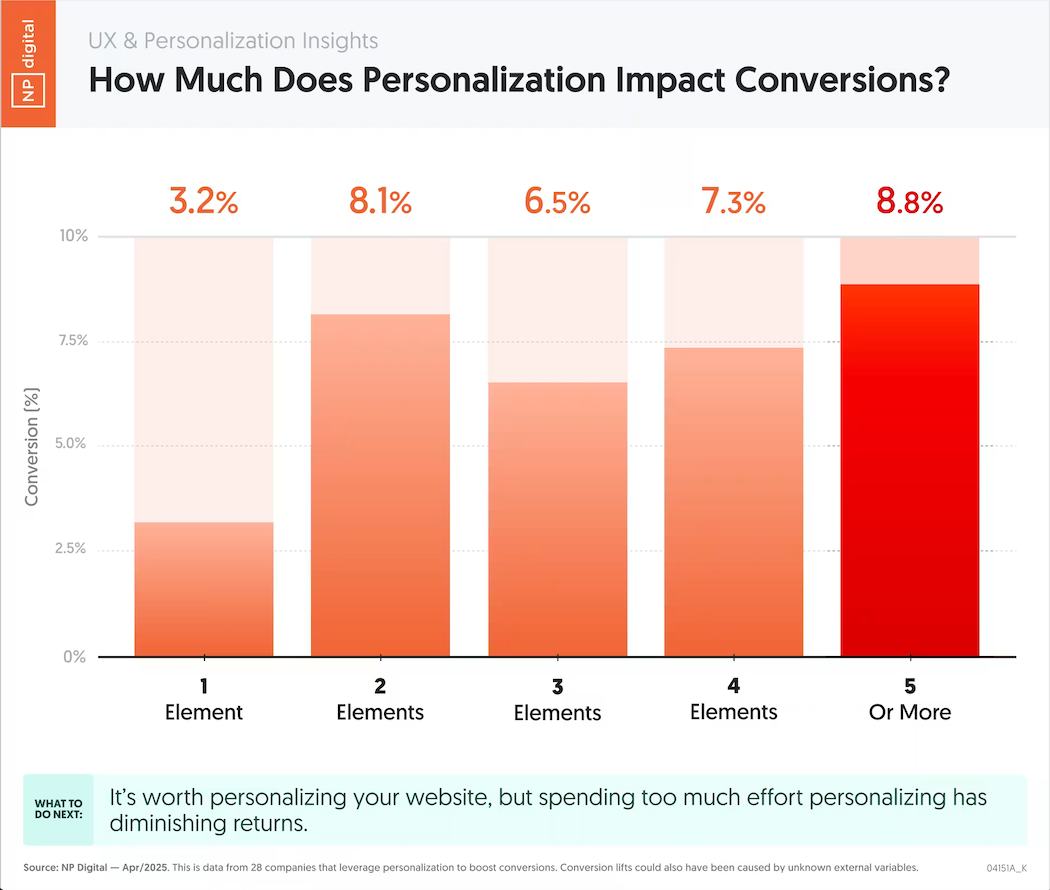 NP Digital shows the impact of personalization on conversions through this graph
Contest builders win on reach and volume. A giveaway asks people to do one or two simple things. Enter a form and maybe share to social media, in exchange for a chance at a prize. The value is top-of-funnel: new eyes, new followers, new email addresses at a much lower cost per lead than paid ads. What contest tools sacrifice in lead quality, they make up for in sheer number of entries and viral spread through referral and social-sharing mechanics. Make your giveaway an instant win and watch your participation rate really soar.
The benefits of these two tools go hand in hand. In short: think of contests as a net, and quizzes as a filter. One brings people in. The other tells you who's worth talking to.
Why Using Both Beats Using Either Alone
Run a giveaway on its own and you'll generate a big list, but a chunk of it will be prize hunters who never buy anything. Run a quiz on its own and you'll get high-quality leads, but far fewer of them, because a quiz has no viral mechanism and no reason for people to share it with friends.
Chain them together and you get the best of both:
- Contest first, for reach. Run a giveaway with a broadly appealing prize and referral-based entries ("get 3 extra entries for every friend you refer"). This is where you build volume fast.
- Quiz second, for qualification. Once someone's in your list, invite them into a short quiz tied to your product — "Find out which plan fits your team" or "Take the 60-second [industry] readiness quiz." This is where you sort real buyers from raffle tourists.
- Segment and follow up based on quiz results, not contest entry alone. The person who finished the quiz and scored high-intent is a very different lead than the person who only entered the giveaway and never engaged again.
This two-step structure also solves a problem both tools have on their own: contests have no natural way to ask follow-up questions, and quizzes have no natural way to go viral. Put them in sequence and each covers the other's blind spot.
3 Examples of Quiz + Contest/Giveaway Integrations
Example 1: Roll Out the Quiz and Giveaway in 2 Stages
Say you're a SaaS company launching a new feature. Instead of choosing between "run a giveaway" or "run a quiz," structure the campaign like this:
- Week 1–2: Giveaway for a relevant prize (a free year of your product, a bundle of industry tools) with social-sharing entries to maximize reach.
- Week 3: Email everyone who entered with a short, genuinely useful quiz — "What's your biggest bottleneck?" — that ends in a personalized recommendation.
- Week 4: Route quiz-takers by outcome into tailored nurture sequences; keep giveaway-only entrants in a lighter, longer-term newsletter track.
You end up with a large list from the contest and a ranked, segmented subset from the quiz — without paying for two separate campaigns from scratch.
Example 2: The Quiz Is the Entry
Instead of running a giveaway and a quiz as two separate steps, you can merge them into one. The entrant takes the quiz, and simply finishing it (or hitting a certain score) counts as their giveaway entry. There's no separate "enter here" form after the fact.
This works well when you want the qualification benefits of a quiz without asking people to do two things. A skincare brand might run a "What's your skin type?" quiz where completing all the questions automatically enters you into a giveaway for a bundle matched to your result. The entrant gets a personalized recommendation, you get a segmented lead, and the giveaway becomes the incentive that gets people to finish the quiz instead of abandoning it halfway through.
The tradeoff is reach. Because the entry mechanism requires more effort than clicking a single button, you'll generally see fewer total entries than a standard giveaway. What you lose in volume, you make up for in quality: everyone in that list already told you something specific about themselves, which makes the follow-up email far more relevant than "congrats on entering, here's 10% off."
Example: The Quiz Is the Contest
This version flips the odds mechanic entirely. Instead of a single instant-win moment or a random draw, entrants compete on quiz performance itself. Each correct answer counts as an extra chance to win, and the highest scorers either win outright or get weighted odds in a final drawing.
This structure works particularly well for brands with genuine subject-matter authority, think financial literacy quizzes from a fintech company, product-knowledge trivia from a specialty retailer, or "how well do you know [your industry]" formats. The competitive element (think score sharing with a "beat your friend's score" prompt) tends to drive more repeat engagement and social sharing than a standard one-and-done giveaway entry, since people naturally want to compare results.
ShortStack’s Knowledge Quiz template allows you to build a quiz that shows a graded score to each participant and allow quiz-takers to share their results.
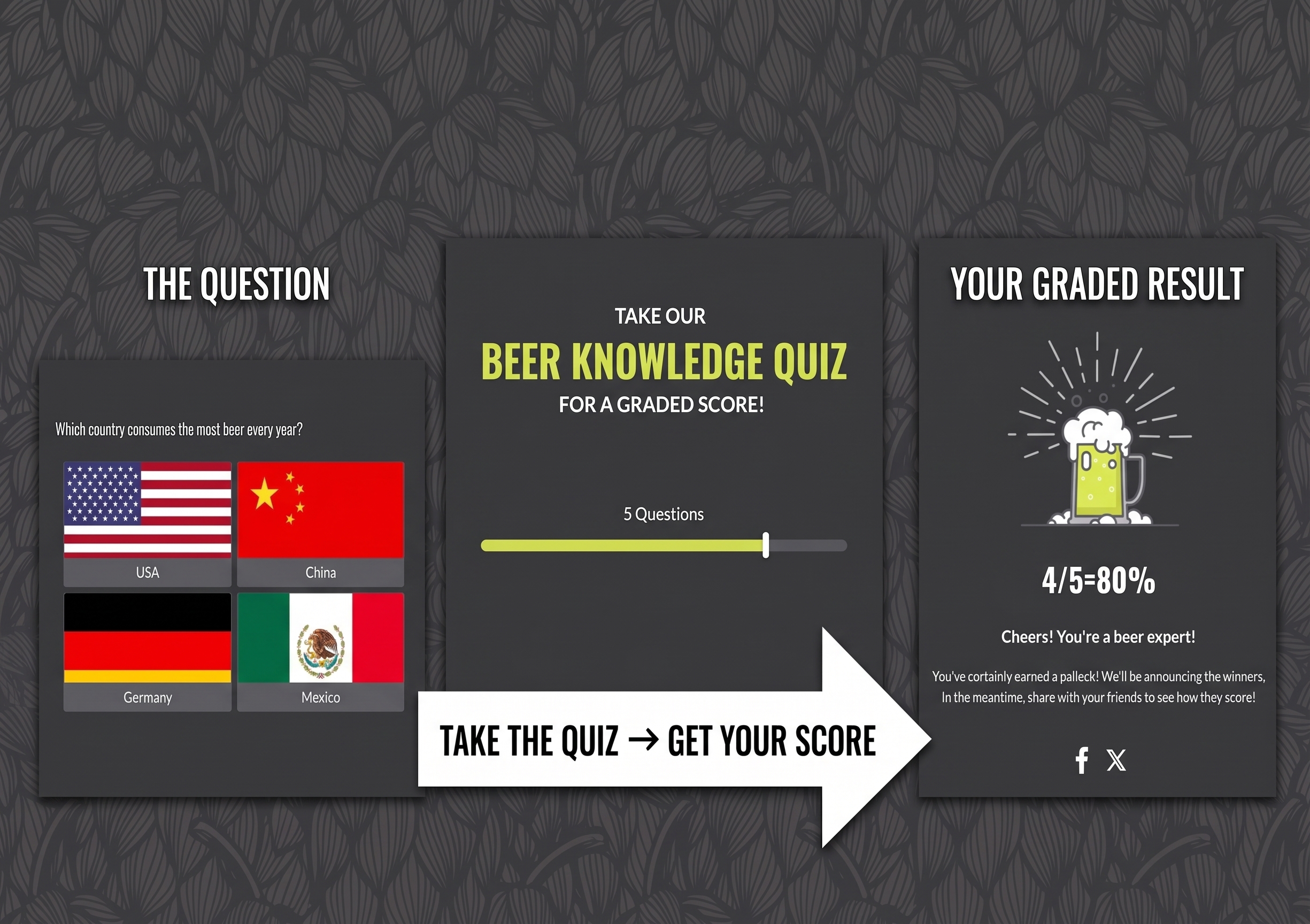 ShortStack’s Knowledge Quiz template. Try it!
It also does something a normal quiz can't: it rewards expertise or attention, not just participation. That makes it a good fit when you want the entry pool skewed toward people who are already engaged with your category, rather than pure prize hunters chasing the easiest possible giveaway.
What to Look For in Your Tools
If you're building this kind of two-stage funnel, the practical question isn't "quiz or contest" — it's whether your tools can talk to each other. In a best-case scenario, you can use one tool to incorporate all of the elements. Here’s what to look for:
- Shared entry/lead data. You don't want to manually merge two spreadsheets. Look for tools that export to (or integrate directly with) the same CRM or email platform.
- Branching logic on the quiz side. A quiz that just collects an email isn't much better than a contest entry form. The value is in the branching and scoring.
- Referral and social-entry mechanics on the contest side. If your giveaway tool can't do "share for extra entries," you're leaving most of the viral upside on the table.
- One platform, when possible. Running both contest and quiz functionality through a single tool — rather than stitching together two subscriptions — keeps your data in one place and your reporting honest. It's one of the reasons teams running higher-volume, multi-step campaigns often consolidate onto a platform built to handle both entry types rather than juggling separate quiz and giveaway vendors.
Putting It Together with ShortStack
ShortStack is built to run quizzes and contests as one connected experience rather than two separate tools bolted together. You can build a scored quiz where each correct answer adds an entry, layer in referral mechanics so entrants get extra chances for sharing, and route every lead into the same list regardless of which path they came in through. Because entry data, scoring logic, and prize fulfillment all live in the same platform, there's no exporting from one tool and importing into another, and no reconciling two separate reports to figure out who actually engaged versus who just clicked through for a chance to win. For a two-stage or hybrid funnel like the ones above, that means you can launch the whole thing, quiz, giveaway, or a blend of both, without stitching together a quiz vendor and a giveaway vendor and hoping their data lines up.
Want me to also add a shorter, one-line version in case the post format calls for something punchier instead?
The Bottom Line
Quiz builders and contest builders aren't competitors; they're sequential tools solving different halves of the same problem. Contests build your list. Quizzes tell you who on that list is actually worth pursuing. Marketers who treat this as an either/or decision are leaving leads, and revenue, on the table by only ever doing half the funnel.