How to Run an Instagram Contest in 2026: Rules, Tools, and Real Campaign Examples
Instagram contests work in 2026, but the brands seeing real results are treating them as full marketing campaigns, not one-off posts. This guide covers everything you need to know: Instagram's actual promotion rules, the four contest formats and when to use each one, how to collect and manage entries without a spreadsheet, and a real example of a brand that generated 35,000 comments from a single post.
:format(webp))
Instagram contests still work. That's the first thing worth saying, because if you've been running them for a few years and the results feel less exciting than they used to be, the problem usually isn't the tactic. It's the execution.
The brands seeing real results from Instagram contests in 2026 are the ones treating them as proper marketing campaigns, not afterthoughts. They're setting clear goals, choosing the right contest format for those goals, promoting aggressively before and during the entry period, and using the right tools to manage entries and pick winners without it becoming a part-time job.
This guide covers all of it: the rules, the formats, the tools, and what an actual successful campaign looks like in practice.
Why Instagram Contests Still Deliver
Before getting into the how, it helps to understand what you're actually buying when you run an Instagram contest.
Comments, tags, and follows generated by a contest aren't just vanity metrics. They're algorithmic signals. When a post generates a high volume of comments quickly, Instagram's algorithm reads that as engagement worth amplifying and distributes the content to a wider audience. A well-run contest can push your post into the feeds of people who have never heard of your brand, people who were reached not because you paid for an ad, but because your existing followers tagged them.
According to an Instagram study done by Metricool, “the critical first hours after posting [is when] the platform prioritizes content that generates participation.” This is why contests hosted on Instagram are the perfect medium for boosted metrics.
The tagging mechanic in particular is one of the most cost-effective forms of word-of-mouth marketing available on any platform. When someone tags a friend in your contest post, they're personally endorsing your brand to that person. That's a warm introduction you couldn't buy with a paid ad.
There's also the list-building angle. A comment-to-enter contest keeps your audience on Instagram. A contest built around a landing page, where entering requires submitting an email address, turns Instagram engagement into owned data. That's a meaningful difference if your goal is building a marketing list rather than just boosting a post's engagement numbers.
Learn more about building your contest around a landing page and why you should.
Instagram Contest Rules You Need to Know
Instagram has promotion guidelines that apply to any contest or giveaway run on the platform. Violating them won't necessarily get your account banned immediately, but it's not a risk worth taking. Here's what actually matters.
You must include a disclaimer. Instagram requires that any promotion include a statement acknowledging that the contest is not sponsored by, endorsed by, administered by, or associated with Instagram. Keep it short: "This promotion is in no way sponsored, endorsed, or administered by, or associated with Instagram." Put it in your caption.
You cannot ask people to tag themselves in content they're not in. Asking participants to tag a friend in the comments is fine. Asking them to tag themselves in a photo or video they didn't appear in violates Instagram's guidelines.
You are responsible for the lawful operation of your contest. Instagram's guidelines put the compliance burden on you, not the platform. Depending on where you and your participants are located, there may be local laws governing sweepstakes and contests, including rules around odds disclosure, no-purchase-necessary statements, and prize value reporting. If you're running a large contest with a significant prize, it's worth having someone review your rules before you publish them.
Follow-to-enter is allowed. Asking participants to follow your account as a condition of entry is permitted. Just make sure it's clearly stated in your rules.
The Three Most Effective Instagram Contest Formats
Not every contest format serves the same goal. Here's how to match the format to what you're actually trying to accomplish.
1. Comment-to-Enter
Best for: Fast follower growth, high entry volume, broad reach
This is the simplest format and typically generates the most entries. You post a photo or video with a caption asking people to comment to enter, usually with a requirement to follow your account and tag one or more friends. Every tag is a new person introduced to your brand.
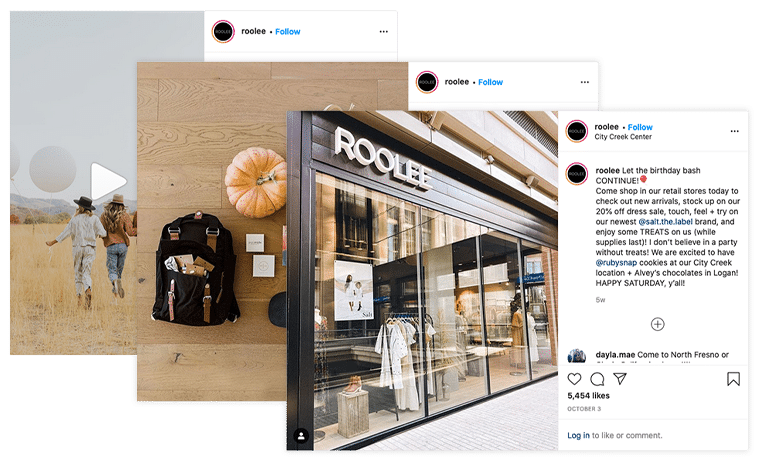
ROOLEE, a women's clothing and home goods brand based in Logan, Utah, used this format to celebrate their seventh anniversary. They posted a single contest photo asking followers to follow the account, like the post, and tag someone they love in the comments for a chance to win a $700 shopping spree. Over nine days, the post collected 35,016 comments and 14,489 likes, and their Instagram following grew by 2,200 new followers during the entry period. They used ShortStack to import all the comments at the end of the contest and selected a random winner from the verified entry pool.
Read more about ROOLEE’s Instagram contest here.
Comment-to-enter contests work because the barrier to entry is almost zero. Anyone with an Instagram account can participate in under ten seconds.
2. Photo or Video Submission Contest
Best for: User-generated content, brand storytelling, deeper engagement
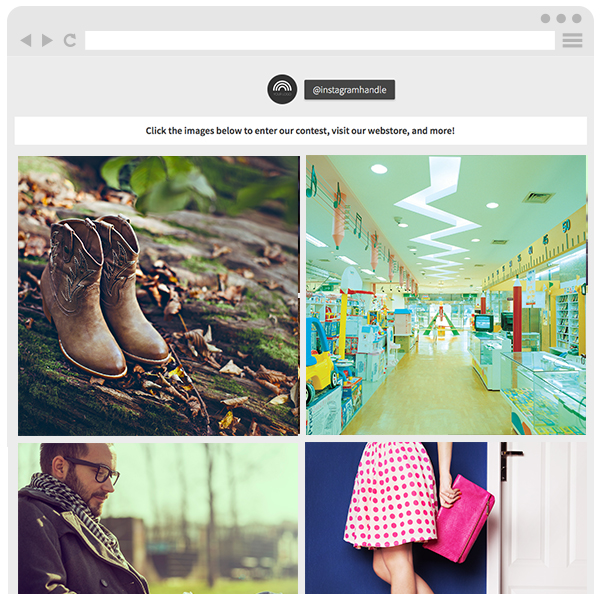
In this format, participants enter by posting a photo or video to their own feed using a specific hashtag you designate. You then collect all the hashtagged submissions and either judge them internally or open them to a public vote. If you’re curious how to set up voting, tools like ShortStack can allow you to import your hashtag feed into a gallery with voting enabled. This gallery can be in the form of a landing page that is linked to from your bio.
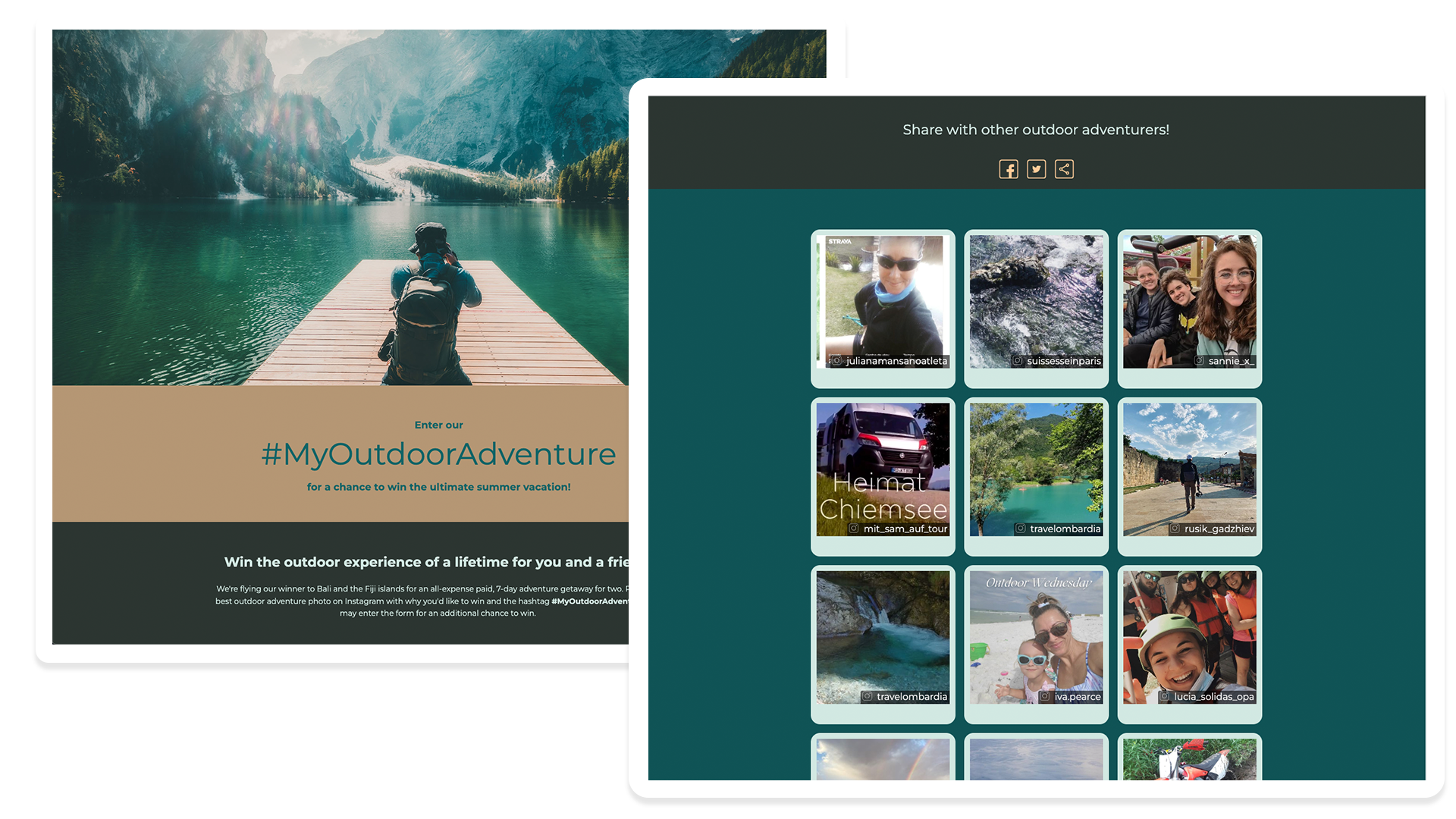
This format generates content you can repurpose across your marketing channels, including your website, email campaigns, ads, and future social posts. It tends to produce higher-quality engagement than a comment-to-enter contest, but the tradeoff is a higher barrier to entry, which usually means fewer total participants.
A good use case: a food brand runs a "show us your best recipe using our product" contest. Entries come in as original photos and videos using the brand's hashtag. The brand collects all submissions using ShortStack's hashtag importer, displays them in a public gallery on a contest landing page, and opens voting to the public. The winning recipe gets featured in an upcoming campaign, and its creator wins a product bundle.
3. Email Opt-In Contest
Best for: List building, lead generation, turning Instagram followers into owned contacts
This format uses Instagram as the top of the funnel, not the finish line. Your contest post directs followers to a link in your bio or a landing page where they enter their email address to participate. The prize is announced on Instagram, but the entry happens off-platform.
The advantage here is significant. Instead of collecting comments that live on Instagram's servers, you're collecting email addresses that live in your marketing platform. Those contacts are yours regardless of what Instagram's algorithm does next month. Read more about the benefits of collecting email addresses here.
ShortStack is built specifically for this format. You can create a contest landing page, embed an entry form that feeds directly into your email list, and run the whole thing from one place. The Instagram post drives the traffic; the landing page captures the lead.
How to Set Up an Instagram Contest: Step by Step
Step 1: Define Your Goal
Every decision you make about your contest, from the format to the prize to the entry requirements to the duration, should flow from one clearly defined goal. Common goals include growing your follower count, building your email list, generating user-generated content, driving traffic to a specific product page, or increasing engagement on a post.
Pick one primary goal and optimize for it. A contest trying to accomplish everything at once usually accomplishes nothing particularly well.
Step 2: Choose Your Prize
Your prize needs to do two things: motivate your target audience to enter, and attract the right people rather than everyone. A $500 Visa gift card will generate thousands of entries, but most of them will be from people with no real interest in your brand. A prize specific to your product or niche will generate fewer entries from people who are genuinely your customers.
As a general rule, the prize should feel aspirational but relevant. For a fitness brand, that might be a full year of supplements or a piece of home gym equipment. For a boutique hotel, it might be a free weekend stay. The prize should make your ideal customer stop scrolling.
Step 3: Write Your Contest Post
Your caption needs to do four things clearly: tell people what the prize is, tell them exactly how to enter, tell them when the contest ends, and include the required Instagram disclaimer.
Keep the entry instructions in the first two lines of the caption, before Instagram truncates it with a "more" link. Anyone who sees the post in their feed shouldn't have to tap through to find out how to enter.
A solid caption structure looks like this:
We're giving away [prize] to celebrate [reason]. To enter: follow [@youraccount], like this post, and tag a friend in the comments below. Contest closes [date] at [time]. One winner selected at random. This promotion is not sponsored by or affiliated with Instagram.
Short. Clear. Everything in one place.
Step 4: Promote It Before and During the Entry Period
The biggest mistake brands make with Instagram contests is posting once and waiting. ROOLEE's contest generated over 35,000 entries partly because they didn't just post the contest and hope. They released a full schedule of their anniversary week events beforehand so followers knew what was coming, and they used Instagram Stories and influencer partnerships to build awareness before and during the entry period.
Promote your contest in your Instagram Stories daily throughout the entry period, via email to your existing list on launch day and again the day before it closes, through any influencers or brand partners who can share it with their audience, and in a follow-up feed post mid-contest if entries are strong and momentum is building.
The entry period itself is a marketing campaign. Treat it like one.
Step 5: Collect and Manage Entries
For comment-to-enter contests with a modest number of entries, you might be able to manage things manually. For anything over a few hundred comments, you need a tool.
ShortStack's comment importer pulls every comment from your Instagram post into a centralized entry list. From there, you can filter out entries that don't meet your eligibility requirements, remove duplicates, flag spam, and select a random winner from a clean, verified pool. The whole process takes minutes instead of hours.
For hashtag contests, ShortStack's hashtag importer collects all posts using your designated hashtag and brings them into a gallery you can display on a landing page, open to public voting, or use internally to judge submissions.
Step 6: Pick and Announce Your Winner
Use a random selection tool to pick your winner from the verified entry pool. Screenshot the result. Verify the winner is eligible before announcing anything publicly.
Announce the winner by tagging them in the comments of the original contest post. If you have a large following, a follow-up feed post announcing the winner extends the shelf life of the campaign and shows your broader audience that real people win your contests.
Give the winner a clear deadline to claim their prize. Between 48 and 72 hours is standard. Have a backup winner selected and ready in case the first one doesn't respond in time.
What Makes a Contest Actually Succeed: The ROOLEE Example
It's one thing to list the steps. It's more useful to see them executed well.
ROOLEE's seventh anniversary contest is a strong model because their results weren't an accident. The volume of entries came from a deliberate combination of the right format, a low barrier to entry, a relevant and high-value prize, and aggressive promotion across their website, social channels, and influencer partners before and during the entry period.
Their marketing manager noted that releasing a schedule of events before the contest launched helped drive engagement with both their website and social channels. People knew what was coming and where to look for it. That pre-contest momentum carried directly into the entry period.
At the end of nine days, ROOLEE used ShortStack to import all comments and pick a winner at random. The winner was tagged in the original post. The whole process, from 35,000-plus entries to winner announcement, was handled without a spreadsheet or manual counting.
That's what a well-run Instagram contest looks like in practice.
Frequently Asked Questions
How long should an Instagram contest run? Seven to fourteen days is the sweet spot for most brands. Short enough to create urgency, long enough to give your promotional efforts time to drive entries. Contests shorter than three days often don't leave enough time to promote effectively. Contests longer than two weeks tend to lose momentum.
How often can I run Instagram contests? There's no hard limit, but running them too frequently can train your audience to wait for giveaways instead of engaging with your regular content. Most brands find that one contest per quarter feels frequent enough to generate excitement without diminishing returns.
Do I need a large following to run an Instagram contest? No. Contests are actually one of the best tools for growing a small following. The tagging mechanic introduces your account to new people regardless of your current size. Start with a prize that's highly relevant to your niche, keep the entry requirements simple, and promote it beyond Instagram using email and any other channels you have.
Can I require people to follow my account to enter? Yes. Requiring a follow as a condition of entry is permitted under Instagram's guidelines. Just make it explicit in your caption.
What's the difference between a contest and a sweepstakes? A contest involves judging based on skill or merit, like the best photo or the most creative answer. A sweepstakes selects a winner at random with no skill component. Most Instagram giveaways are technically sweepstakes because the winner is chosen randomly from all eligible entries. The distinction matters for legal compliance, particularly around no-purchase-necessary disclosures.
What should I do if I get a suspicious number of entries from fake accounts? ShortStack's fraud detection tools flag suspicious entries automatically. For manual review, look for accounts with no profile photo, very few posts, and follower counts under ten. Remove those entries before selecting a winner and keep a record of the ones you removed and why.
Running an Instagram contest in 2026 is not complicated, but it does require intention. Choose the right format for your goal, offer a prize your actual customers want, promote it like a campaign rather than a single post, and use the right tools to manage entries and select a winner cleanly.
Do those things and the results take care of themselves.